How Concrete Specifications Differ for Ramps, Driveways and Access Roads
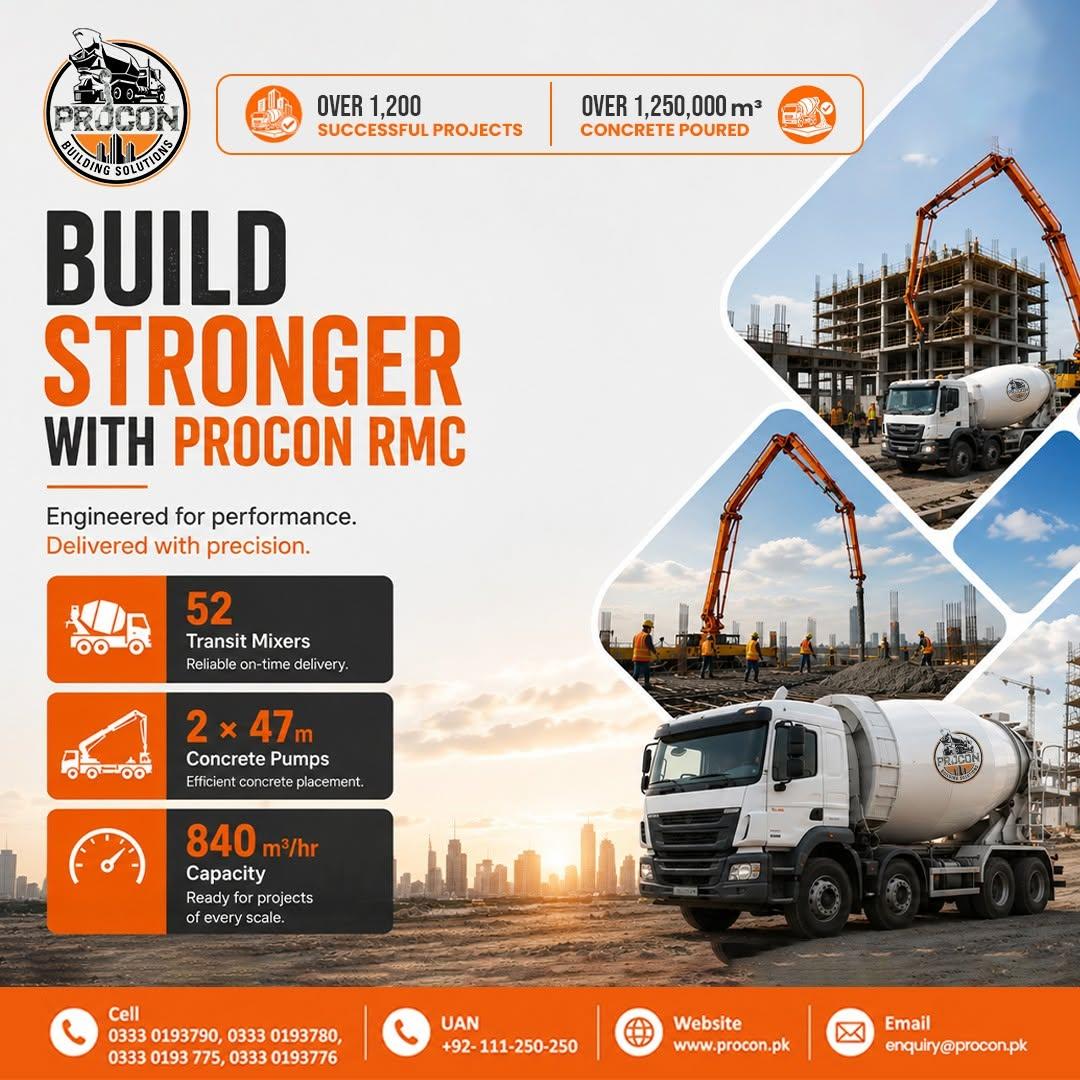
When planning hardscaping or heavy-duty infrastructure projects, assuming that all flat concrete surfaces require the same mix design is a costly mistake. Different structural applications endure unique mechanical forces, friction requirements, and weight distributions that dictate specific adjustments in compressive strength, aggregate size, and reinforcement. A backyard pathway, a high-inclination garage ramp, and an industrial heavy-transit corridor each demand distinct engineering blueprints to prevent premature cracking, rutting, or surface shearing. Understanding these technical nuances is essential for maximizing structural longevity and safety across civil developments. Whether coordinating a major commercial layout or ordering high-grade materials through Procon, builders must tailor their mix formulations to the operational environment. For large-scale pours requiring efficient vertical or horizontal placement, utilizing specialized equipment like a concrete pump Karachi ensures uniform distribution and optimal consolidation across challenging terrain.
Engineering Ramps for Maximum Friction and Gradient Load
Ramps experience extreme multi-directional stresses due to the combined effects of gravity, vehicular acceleration, and heavy braking loads concentrated on an incline:
Higher Compressive Strengths: Because vehicles exert intense shear forces while climbing slopes, ramps typically require higher psi ratings compared to standard flat paving.
Specialized Surface Texturing: Broom finishes or grooved patterns are systematically introduced into the wet mix surface to maintain high traction and prevent vehicle slipping during wet weather conditions.
Enhanced Steel Reinforcement: Increased grade and placement of rebar grids are critical to counteract the gravitational pull and prevent slab displacement over time.
Balancing Flexibility and Load Distribution in Residential Driveways
Driveways serve as everyday entry points that must gracefully handle repeated vehicular traffic, thermal expansion, and localized weight concentrations:
Controlled Joint Spacing: Saw-cut or formed contraction joints are strategically placed to accommodate natural concrete shrinkage and thermal movement without random cracking.
Moderate Thickness Standards: Standard residential applications usually call for a balanced thickness backed by a well-compacted sub-base to evenly distribute the weight of parked automobiles.
Permeable and Sealed Variants: Depending on regional weather patterns, sealing the surface protects against oil stains, moisture seepage, and freeze-thaw degradation.
Designing Access Roads for Heavy Fleet and Industrial Endurance
Access roads are subjected to continuous pounding by heavy commercial trucks, dynamic load shifts, and high-frequency axle counts that require industrial-grade durability:
Rigid Pavement Mix Designs: Industrial access routes utilize robust mix proportions designed to withstand massive fatigue without developing structural rutting.
Deep Sub-Base Preparation: Layered stabilization using crushed aggregate bases prevents subgrade failure under heavy freight and distribution vehicles.
Advanced Admixture Utilization: Water-reducing and air-entraining chemical admixtures are frequently integrated to boost resistance against chemical spills, heavy abrasion, and weathering.
Conclusion
Recognizing how concrete specifications differ across ramps, driveways, and access roads is vital for preventing structural degradation and ensuring long-term safety. By matching compressive strengths, aggregate gradations, and finishing techniques to specific load requirements, engineers can build surfaces that withstand severe environmental and mechanical stress. Proper planning guarantees structural integrity from the sub-base up to the wearing surface. To source reliable, certified materials and expert support for your upcoming construction requirements, explore the professional solutions available through Procon concrete pump Karachi.
Survey No. 423, Ibrahim Hydri, behind Bol head quarter, Korangi creek road, Karachi-74900
+92 21 111 250 250
Join the Conversation
Share Your Thoughts
Related Articles

How Technology Is Changing Concrete Construction in Pakistan
Discover how modern technology is transforming Pakistan’s construction industry through automated batching, smart logistics, concrete pumps, and sustainable methods.

How Ready-Mix Concrete Can Help Contractors Manage Construction Waste
Factory-controlled ready-mix concrete eliminates jobsite material waste, raw aggregate loss, and packaging disposal while ensuring precise volumetric delivery and verified structural quality.

Why Concrete Inspection Matters Before and After Placement
(procon.pk) provides high-grade ready-mix concrete and precision pumping solutions, ensuring structural strength across Pakistan.