Why Consistent Concrete Quality Matters on Construction Sites
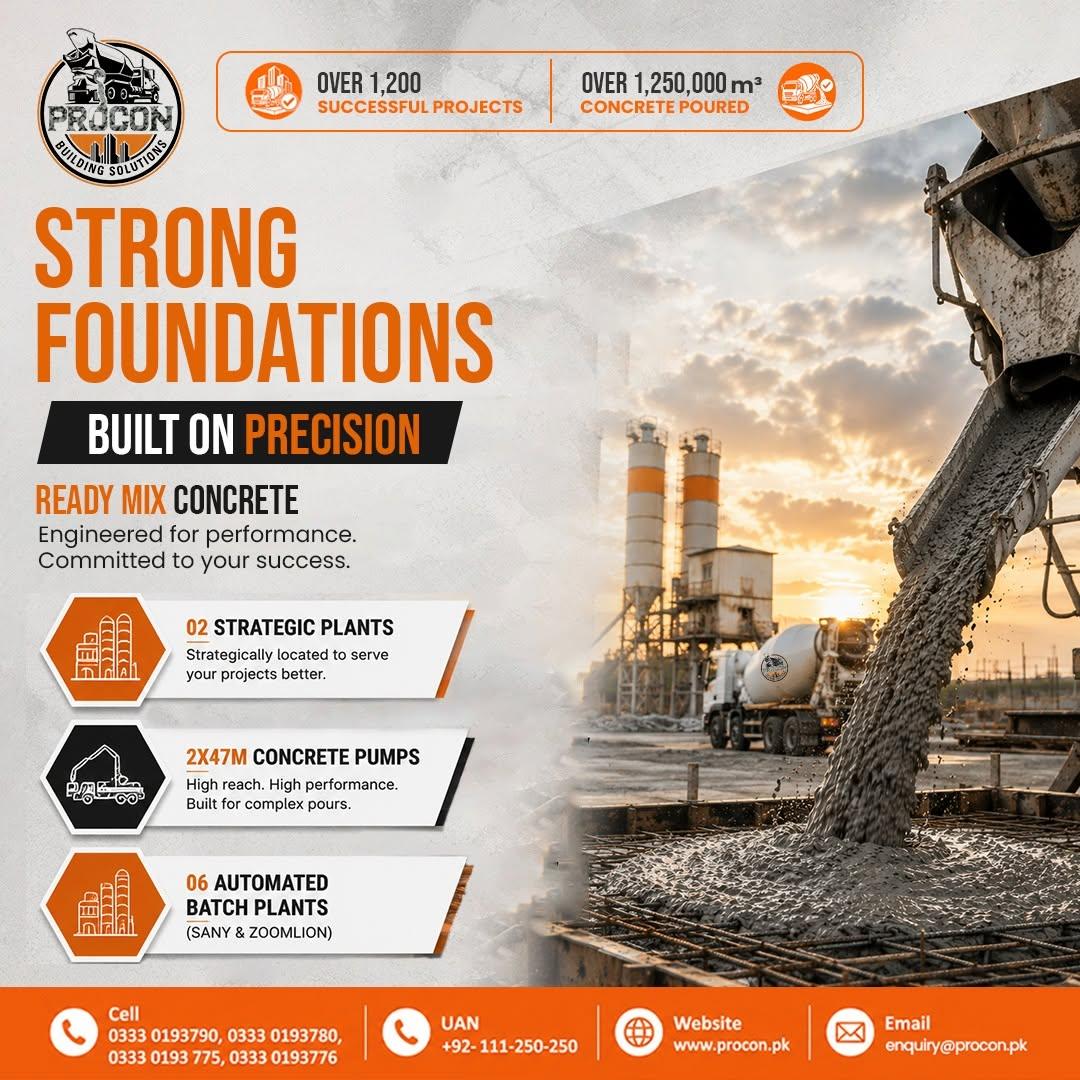
In civil engineering and urban development, structural integrity depends directly on the quality of building materials used. Concrete serves as the foundational backbone for high-rise towers, residential complexes, commercial hubs, and industrial facilities. However, achieving design strength and long-term durability across an entire structure requires absolute material consistency from the first foundation pour to the final roof slab. Traditional manual site-mixing often introduces variable water-cement ratios, human error, and inconsistent aggregate proportioning, which can create structural weak points. Utilizing computerized plant production from established suppliers of ready mix concrete in Pakistan ensures every delivered batch meets strict engineering tolerances and structural standards.
1. Predictable Compressive Strength and Load Capacity
Structural engineers design columns, beams, and foundations based on specific characteristic compressive strengths (such as 20 MPa, 30 MPa, or higher):
Elimination of Weak Batches: Manual site-mixing frequently produces fluctuating strength levels, creating localized weak spots within critical load-bearing elements.
Computerized Weigh-Batching: Factory batching plants use digital scales to measure cement, sand, coarse aggregates, water, and chemical admixtures down to exact design specifications.
Uniform Curing Performance: Consistent material chemistry guarantees predictable hydration, ensuring cylinder break tests match structural design calculations every time.
2. Workability, Slump Control, and Defect Prevention
Fresh concrete must maintain the correct fluid consistency, or slump, to be placed, compacted, and finished effectively without forming structural defects:
Controlled Water-Cement Ratios: Automated sensors monitor aggregate moisture levels, adjusting added water to preserve target workability without compromising ultimate strength.
Flow Around Dense Rebar: Uniform slump allows fresh concrete to flow effortlessly around complex steel reinforcement cages without segregating or leaving internal voids.
Prevention of Honeycombing: Consistent batching prevents air pockets and honeycombing on column and beam surfaces, avoiding costly structural repairs.
3. Long-Term Durability and Environmental Protection
Concrete must support structural loads while protecting internal steel reinforcement from environmental wear, corrosion, and chemical attack:
Low Matrix Permeability: Precise batching yields a dense, compact matrix with minimal capillary pores, blocking the ingress of moisture, airborne chlorides, and carbon dioxide.
Protection Against Subterranean Sulfates: Uniform incorporation of mineral admixtures, such as slag or fly ash, shields foundations from aggressive soil chemicals and saline groundwater.
Reduced Maintenance Overhead: Preventing internal cracking and rebar corrosion extends the operational lifespan of the structure and lowers long-term maintenance costs.
4. On-Site Efficiency, Cost Control, and Compliance
Inconsistent concrete quality causes job-site delays, rejected pour tests, and material waste that can derail project budgets:
Faster Project Execution: Uniform setting times allow contractors to schedule formwork stripping and floor-by-floor construction cycles with total confidence.
Reduced Material Waste: Computerized batching delivers exact volumetric requirements to the site, eliminating the loss and contamination common with raw site stockpiles.
Audit and Approval Compliance: Digital batch tickets provide full material traceability and documented break reports required for municipal approvals and engineering sign-offs.
Conclusion
Material consistency is fundamental to executing safe, high-performance, and cost-effective construction projects. By replacing unpredictable site-mixing with automated, plant-controlled precision, contractors and structural engineers ensure uniform strength, high workability, and long-term durability across every structural element. Investing in factory-batched concrete protects capital investments, minimizes structural risks, and ensures compliance with international engineering standards. To explore certified mix designs, technical strength grades, and reliable delivery options for your next project, learn more about ready mix concrete in Pakistan today.
Survey No. 423, Ibrahim Hydri, behind Bol head quarter, Korangi creek road, Karachi-74900
+92 21 111 250 250
Join the Conversation
Share Your Thoughts
Related Articles

How Technology Is Changing Concrete Construction in Pakistan
Discover how modern technology is transforming Pakistan’s construction industry through automated batching, smart logistics, concrete pumps, and sustainable methods.

How Ready-Mix Concrete Can Help Contractors Manage Construction Waste
Factory-controlled ready-mix concrete eliminates jobsite material waste, raw aggregate loss, and packaging disposal while ensuring precise volumetric delivery and verified structural quality.

Why Concrete Inspection Matters Before and After Placement
(procon.pk) provides high-grade ready-mix concrete and precision pumping solutions, ensuring structural strength across Pakistan.